
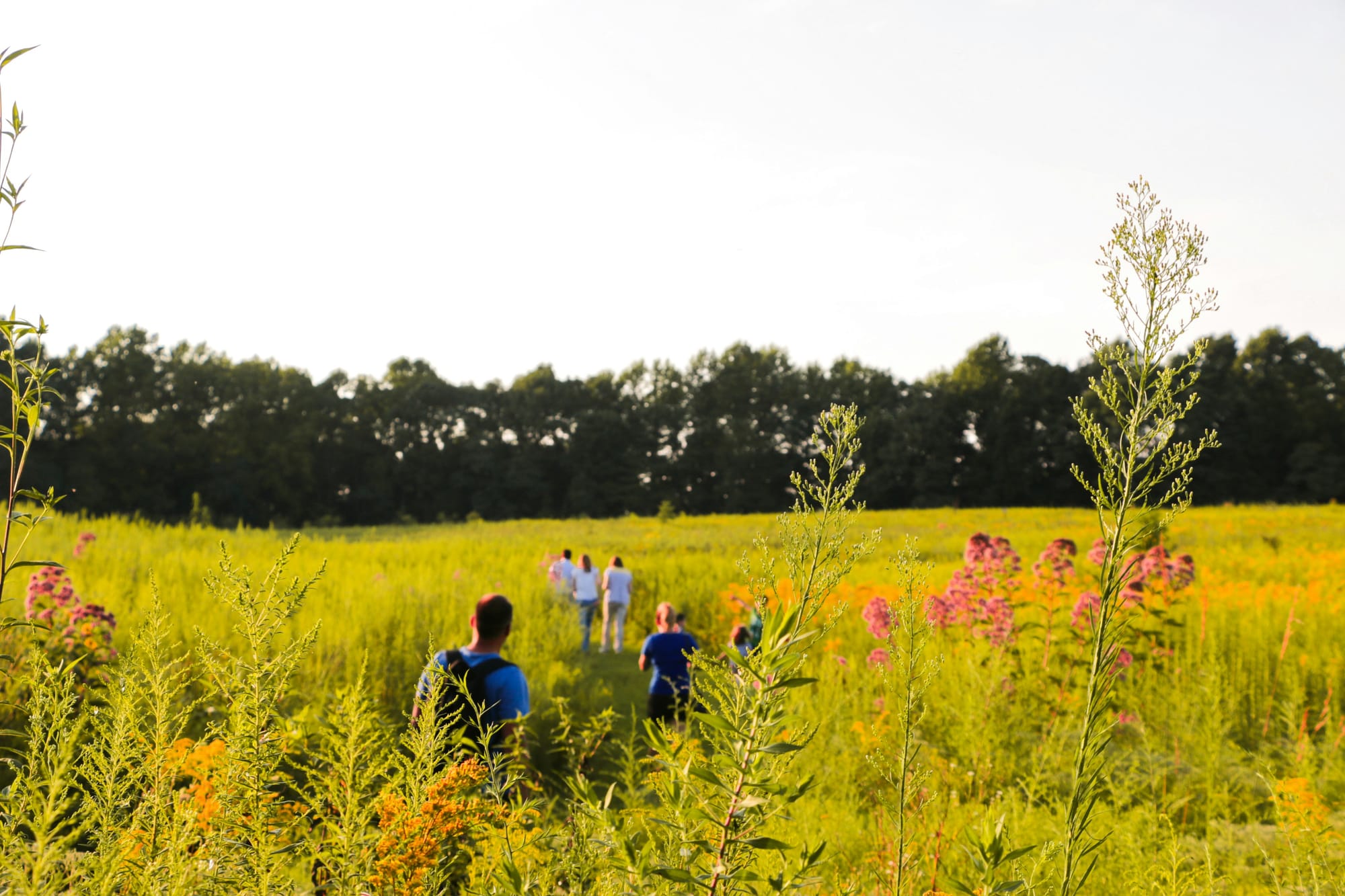
Eco-cultural mapping is a community process where people work together to create large, shared maps of a place, exploring its past, present, and potential future. These maps don't just show what is physically there—they also capture stories, memories, wildlife, history, local knowledge, and what different people value about that place. The aim is to build a richer understanding of a landscape before planning how to care for and restore it.
The process brings together people of different ages and backgrounds to explore a place together. Communities first look at the past to understand how the landscape has changed, then map what exists today using local knowledge alongside ecological surveys. Finally, they imagine what the place could become in the future and work together to develop a realistic action plan to help make that vision happen. Throughout the process, everyone's knowledge is valued and the maps continue to evolve as the community and landscape change.
By creating space for different generations, local knowledge, and lived experience to sit alongside scientific evidence, eco-cultural mapping helps communities bring people together to understand their place, imagine a better future for it, and agree on practical actions to get there. It helps build a shared vision and stronger support for change. Rather than a few people making decisions, it encourages whole communities to shape the future of their local area together.
Action for Conservation is using eco-cultural mapping across a range of projects and programmes. We believe that the practice is successful when:
- Everyone can become an expert in their place
- Anyone feels able to contribute to a map
- Maps are checked and change over time
- Community is the answer when questions are raised within the mapping process.
WATCH FULL WEBINAR
Diving deeper
Ancestral Permaculture
- The Heartwood Project: A youth-led, intergenerational initiative at a 160-acre social farm in Derbyshire where young people, farmers, and the local community use eco-cultural mapping and hands-on restoration to reconnect food growing, nature, and people.
- Intergenerational Approach: An approach developed by Action for Conservation that brings together young people, landowners, farmers, ecologists, and local communities to co-design and deliver ambitious nature restoration projects through eco-cultural mapping and shared decision-making.
- Heartwood Social Farm: A community-focused social farm near Matlock that combines regenerative farming, nature restoration, therapeutic experiences, and education to create a thriving landscape for both people and wildlife.
Stay engaged
Opportunities to keep connected and learn more
- Action for Conservation - https://www.actionforconservation.org/our-people
Support the movement
We offer these webinars free of charge to spread the good work and inspiration that these people are doing. It takes countless hours of coordination, resources and preparation to bring this all together.
If you have received value, inspiration from the series and want to reciprocate, or simply want to support us, we are now fundraising to put together an in-person international transition gathering in Portugal for May 2027. We do not have a budget for this, and are relying on donations and support to make it happen. If you are able to donate and support this cause it would be greatly appreciated!
Support by Donating here 👇

Member discussion